Support our educational content for free when you purchase through links on our site. Learn more
🎹 What Makes a Song Synth-Pop? The 10 Secrets Revealed (2026)

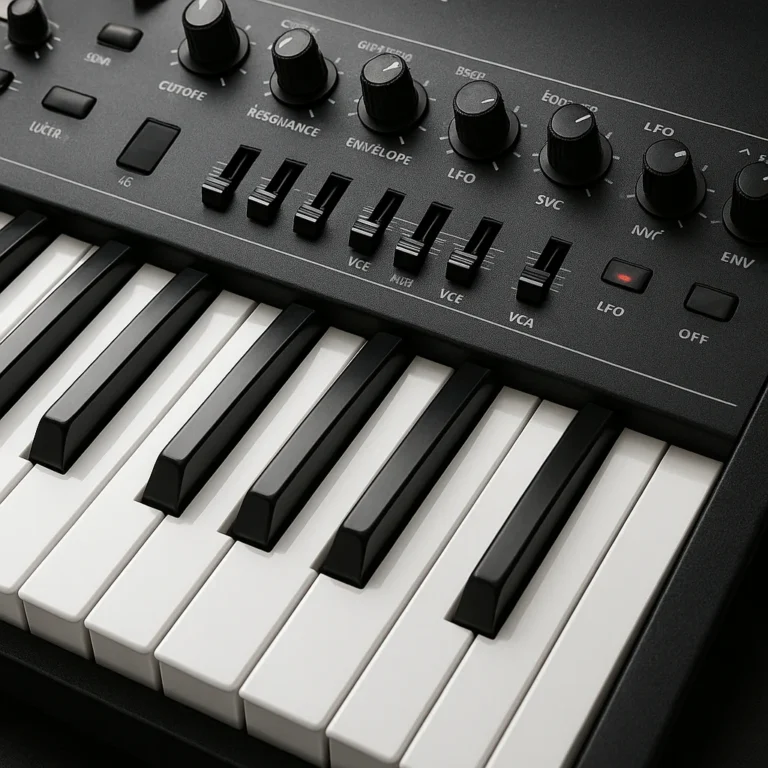
A song is synth-pop when the synthesizer acts as the lead voice, driving the melody and bassline while a drum machine provides a steady, danceable beat. If you’ve ever wondered what makes a song synth-pop, the answer lies in that specific marriage of electronic textures and catchy pop song structures. It’s not just about using a keyboard; it’s about replacing the traditional rock band with circuits and sequencers to create a sound that feels both futuristic and deeply human.
We remember the first time we heard “Cars” by Gary Numan; the robotic voice and the cold, pulsing bassline felt like stepping into a sci-fi movie, yet the hook was undeniably catchy. That moment defined the genre: technology serving emotion rather than replacing it. Today, from the retro-futuristic hits of The Weeknd to the indie-electronic sounds of Chappell Roan, this blueprint remains the gold standard for modern pop.
Key Takeaways
- Synthesizer Dominance: The synth must be the primary instrument, often replacing guitars and live drums entirely.
- Rhythmic Precision: A drum machine or sequenced beat (often four-on-the-floor) is essential for that signature driving pulse.
- Melodic Simplicity: The genre relies on catchy, repetitive hooks and arpegiated basslines that stick in your head.
- Emotional Contrast: Despite the “cold” electronic sound, the best tracks feature warm, human vocals and relatable lyrics about love or isolation.
- Timeless Evolution: From the analog warmth of the 80s to the digital precision of 2026, the core DNA of synth-pop remains adaptable and enduring.
Table of Contents
- ⚡️ Quick Tips and Facts
- 🕰️ From Analog Dreams to Digital Realities: The Synth-Pop Origins Story
- 🎹 The Sonic Blueprint: What Actually Makes a Song Synth-Pop?
- 🎛️ 10 Essential Synth-Pop Characteristics That Define the Genre
- 🎤 15 Iconic Synth-Pop Artists Who Shaped the Sound
- 📈 The Golden Era: How Synth-Pop Conquered the Charts (1981–1985)
- 📉 The Hiatus: Why Synth-Pop Faded and How It Survived (1986–20)
- 🔄 The Neon Revival: Synth-Pop in the 21st Century and Beyond
- 🎚️ Subgenres and Variations: From Coldwave to Electrop
- 🛠️ Gear Guide: The Synthesizers and Drum Machines That Built the Sound
- 🎵 25 Must-Listen Synth-Pop Tracks for the Ultimate Playlist
- 🤔 Common Myths and Controversies Surrounding the Genre
- 🌍 The Global Impact: How Synth-Pop Influenced Modern Pop and Electronic Music
- 🏆 Conclusion: Why Synth-Pop Will Never Die
- 🔗 Recommended Links
- ❓ FAQ: Your Burning Questions About Synth-Pop Answered
- 📚 Reference Links
⚡️ Quick Tips and Facts
Before we dive into the nitty-gritty of oscillators and sequencers, let’s get the basics straight. If you’re new to the scene or just need a quick refresher, here are the golden rules of the synth-pop universe:
- The Synth is King: In a true synth-pop track, the synthesizer isn’t just an accompaniment; it’s the lead instrument. It often replaces the guitar, bass, and even the drums.
- It’s Not Just “Electronic”: While all synth-pop is electronic, not all electronic music is synth-pop. The key differentiator is the pop song structure (verse-chorus-verse) and catchy melodies.
- The “Cold” vs. “Warm” Debate: Early synth-pop (late 70s) was often described as sterile, robotic, and cold. By the mid-80s, it evolved to become warmer, richer, and more danceable.
- The Duo Dynamic: Because synthesizers allowed one person to play multiple parts, the genre is famous for duos (one singer, one player) rather than full rock bands.
- It Never Really Died: From the 80s to the 2020s, the sound has cycled through revivals, proving that a good analog hook is timeless.
Did you know? The very first synth-pop hit top the US charts wasn’t by a British band, but by a Japanese group called Yellow Magic Orchestra, whose track “Computer Game” paved the way for the global explosion.
If you’re looking for the ultimate playlist to get started, check out our guide on 🕺 You Can Dance If You Want To: The Ultimate 80s Song Guide (2026).
🕰️ From Analog Dreams to Digital Realities: The Synth-Pop Origins Story
We often get asked, “Where did this sound come from?” It’s a fair question. The story of synth-pop isn’t just about music; it’s about technology catching up with imagination.
The Precursors: When Rock Met Circuits
Before the 80s, rock was king, and guitars were the scepter. But in the late 60s and 70s, a few brave souls started plugging in the weird boxes.
- Kraftwerk: The German pioneers who treated the synthesizer not as a novelty, but as a serious instrument. Their album Autobahn (1974) is often cited as the spiritual grandfather of the genre.
- Brian Eno: The “father of ambient music” who brought textural experimentation to rock bands like Roxy Music and Talking Heads, proving synths could be atmospheric, not just melodic.
- David Bowie: His “Berlin Trilogy” (Low, “Heroes”, Lodger) blended art-rock with electronic textures, creating a blueprint for the emotional detachment that defined early synth-pop.
The Spark: 197–1980
The genre truly ignited in the late 70s. Punk was loud, angry, and raw. Synth-pop was the calm, calculated counter-revolution.
- Gary Numan: With “Are ‘Friends’ Electric?” and “Cars,” Numan proved that a guy with a Minimog could top the charts without a single guitar riff. He embraced the “robot” persona, turning the fear of technology into a pop hit.
- The Human League: Originally an avant-garde experimental group, they pivoted to pop, eventually recruiting Philip Oakey and creating the sound that would dominate the early 80s.
- Yellow Magic Orchestra (YMO): In Japan, YMO was blending techno-pop with traditional melodies, influencing everyone from Depeche Mode to the future of hip-hop.
Fun Fact: The term “techno-pop” was actually more common in Europe and Japan than “synth-pop” during the early days. It wasn’t until the genre hit the US charts that “synth-pop” became the standard label.
For a deeper dive into the bands that started it all, explore our collection of 🎹 Iconic Synth Pop Songs.
🎹 The Sonic Blueprint: What Actually Makes a Song Synth-Pop?
So, you hear a song and think, “Is this synth-pop?” How do you know? It’s not just about the presence of a synthesizer. It’s about how that synthesizer is used.
1. The Dominant Instrument
In a rock song, the guitar drives the melody. In a synth-pop song, the synthesizer does the heavy lifting. Even if there are guitars in the mix, they are often used for texture or rhythm, not the main hook.
2. The Rhythm Section
Forget the “boom-chick” of a drummer. Synth-pop relies on drum machines and sequenced beats.
- The “Four-on-the-Floor”: A steady kick drum on every beat, borrowed from disco, is a staple.
- The “LinnDrum” Sound: The crisp, snappy snare of the Linn LM-1 is the heartbeat of the 80s.
- The “TR-808” Boom: The deep, booming bass drum of the Roland TR-808 defined the harder edge of the genre.
3. Melodic Structure
Synth-pop melodies are catchy, repetitive, and often simple. They are designed to get stuck in your head. The basslines are usually arpegiated (rapidly playing notes in a sequence) or monophonic (single-note lines) to drive the energy.
4. Lyrical Themes
- Early Era: Isolation, urban alienation, technology, and the future.
- Mid-Era: Romance, heartbreak, dancing, and escapism.
- Modern Era: A mix of nostalgia, emotional vulnerability, and futuristic optimism.
5. Production Aesthetics
- Reverb and Delay: Huge, cavernous sounds that make the track feel like it’s being played in a giant hall.
- Compression: The “pumping” sound that makes the track loud and punchy.
- Layering: Stacking multiple synths to create a thick, wall-of-sound texture.
🎛️ 10 Essential Synth-Pop Characteristics That Define the Genre
Let’s break it down further. If you want to identify a synth-pop track, look for these 10 non-negotiable traits:
- Synthesizer Dominance: The lead melody is almost always played on a synth.
- Drum Machine Rhythms: No live drum kits (usually). The beat is programmed.
- Arpegiated Basslines: Rapidly repeating notes that create a driving momentum.
- Catchy, Simple Melodies: Hooks that are easy to hum after one listen.
- Electronic Textures: Sounds that couldn’t be produced by acoustic instruments (e.g., laser zaps, robotic voices).
- Minimalist Arrangement: Often stripped back to just vocals, bass, and a lead synth.
- Use of Sequencers: Automated patterns that loop and evolve.
- Reverb-Drenched Vocals: Singers often sound like they are in a cathedral or a spaceship.
- Four-on-the-Floor Beat: A steady, danceable rhythm.
- Pop Song Structure: Verse-Chorus-Verse-Chorus-Bridge-Chorus format.
Comparison: Synth-Pop vs. New Wave vs. Electronic Dance Music
| Feature | Synth-Pop | New Wave | EDM (House/Techno) |
|---|---|---|---|
| Primary Instrument | Synthesizer | Guitar + Synth | Synthesizer/Sampler |
| Rhythm Source | Drum Machine | Live Drums or Drum Machine | Drum Machine |
| Vocal Style | Emotional, often detached | Quirky, spoken, or melodic | Often minimal or sampled |
| Structure | Verse-Chorus Pop | Varied, often experimental | Loop-based, long builds |
| Lyrical Theme | Romance, Tech, Isolation | Social commentary, irony | Dance, party, abstract |
| Tempo | 10–120 BPM | 10–140 BPM | 120–130+ BPM |
Pro Tip: If a song has a guitar solo, it’s probably New Wave or Post-Punk, not pure Synth-Pop. Synth-pop rarely features guitar solos!
🎤 15 Iconic Synth-Pop Artists Who Shaped the Sound
You can’t talk about the genre without mentioning the titans who built it. Here are the 15 artists you need to know:
- Kraftwerk: The godfathers. Their influence is immeasurable.
- Gary Numan: The first true synth-pop star with “Cars.”
- The Human League: “Don’t You Want Me” is the anthem of the genre.
- Depeche Mode: From dark, mody synth-pop to stadium-filling rock.
- Yazoo (Yaz): Alison Moyet’s powerhouse vocals over Vince Clarke’s synths.
- Soft Cell: “Tainted Love” is the ultimate dark synth-pop ballad.
- OMD (Orchestral Manoeuvres in the Dark): Melodic genius with a touch of melancholy.
- Eurythmics: Annie Lenox and Dave Stewart brought a unique, soulful edge.
- Ultravox: “Vienna” is the epitome of the mody, cinematic synth-pop sound.
- New Order: Bridged the gap between post-punk and dance music.
- a-ha: “Take On Me” brought the genre to the US mainstream.
- Pet Shop Boys: The masters of witty, sophisticated synth-pop.
- Erasure: Andy Bell’s vocals and Vince Clarke’s melodies are a perfect match.
- Ladytron: The modern revivalists who kept the 80s spirit alive in the 20s.
- The Weeknd: “Blinding Lights” proved synth-pop could still dominate the 2020s.
For more on the queens of the genre, check out our 👩 🎤 Female Synth Pop Artists category.
📈 The Golden Era: How Synth-Pop Conquered the Charts (1981–1985)
The early 80s were a golden age for synth-pop. It wasn’t just a niche; it was the mainstream.
The British Invasion
The UK was the epicenter. Bands like The Human League, Soft Cell, and Ultravox were topping the charts. The New Romantic movement, with its flamboyant fashion and gender-bending aesthetics, was inextricably linked to the music.
- 1981: The year synth-pop exploded. “Don’t You Want Me” and “Tainted Love” both hit #1 in the UK.
- 1982: Depeche Mode’s A Broken Frame and Yazoo’s Upstairs at Eric’s solidified the sound.
- 1983: Eurythmics’ “Sweet Dreams” became a global phenomenon.
The American Breakthrough
The US was slower to catch on, but once it did, it went hard.
- a-ha: “Take On Me” (1985) was a cultural reset. The music video, with its rotoscope animation, is still iconic today.
- The Cars: While often called “New Wave,” their heavy use of synths made them a staple of the American synth-pop scene.
Why It Worked
The combination of affordable technology (like the Yamaha DX7) and catchy songwriting made synth-pop accessible. It was music for the future, and everyone wanted to be part of it.
📉 The Hiatus: Why Synth-Pop Faded and How It Survived (1986–20)
By the late 80s, the tide turned. Grunge was coming, and the “synthetic” sound was seen as outdated and uncool.
The Decline
- Oversaturation: Too many bands were copying the formula, leading to a flood of mediocre tracks.
- The Grunge Backlash: Nirvana and Pearl Jam brought raw, distorted guitars back to the forefront. Synth-pop was labeled “fake.”
- Technological Shift: The rise of house music and techno in clubs pushed the pop-oriented synth sound to the sidelines.
The Survival
But it didn’t die. It went underground.
- Indie Pop: Bands like The Smiths (who used synths sparingly) and The Cure kept the spirit alive.
- Electroclash: In the late 90s, artists like Ladytron and The Postal Service began reviving the sound, blending it with indie rock.
- Synthwave: A subgenre emerged, focusing on the nostalgic, cinematic sounds of the 80s.
Did you know? Even during the “dark ages” of synth-pop, Pet Shop Boys and Erasure continued to release hits, proving that the genre had staying power if the songwriting was strong enough.
🔄 The Neon Revival: Synth-Pop in the 21st Century and Beyond
The 20s and 2010s saw a massive resurgence of synth-pop. It wasn’t just a nostalgia trip; it was a reinvention.
The 20s: Electroclash and Indie
- The Postal Service: “Give Up” (203) blended indie rock with electronic beats, creating a new sound.
- Ladytron: Brought a darker, more aggressive edge to the genre.
- Kasabian: While a rock band, they heavily incorporated synth-pop elements.
The 2010s: Pop Dominance
- Lady Gaga: “Bad Romance” and “Poker Face” were pure synth-pop.
- Kesha: “Tik Tok” brought the genre to the top of the charts.
- The Weeknd: “Blinding Lights” (2020) became one of the bigest songs of all time, proving that the 80s sound was still relevant.
The 2020s: Nostalgia and Innovation
- Dua Lipa: “Levitating” and “Physical” are modern classics.
- The Midnight: Leading the synthwave charge with a focus on cinematic storytelling.
- Chappell Roan: A new generation of artists using synth-pop to explore themes of identity and queer joy.
For the latest in the genre, check out our 🚀 Modern Synth Pop category.
🎚️ Subgenres and Variations: From Coldwave to Electrop
Synth-pop is a big tent. Here are the main subgenres you should know:
- Coldwave: Dark, minimal, and atmospheric. Think Joy Division (early) or Molchat Doma.
- Electrop: A harder, more aggressive version of synth-pop, often with distorted basslines. Robyn and Carly Rae Jepsen (some tracks) fit here.
- Synthwave: A nostalgic, cinematic subgenre that mimics the sound of 80s movie soundtracks. Kavinsky and Carpenter Brut are key artists.
- Chillwave: A dreamy, lo-fi version of synth-pop, often with heavy reverb and tape saturation. Washed Out and Toro y Moi are pioneers.
- Italo Disco: An Italian variant that is more dance-oriented and melodic. Gazebo and Righeira are key names.
🛠️ Gear Guide: The Synthesizers and Drum Machines That Built the Sound
Want to make your own synth-pop? You need the right tools. Here are the legendary machines that defined the genre:
The Synthesizers
- Roland Jupiter-8: The king of polyphonic synths. Warm, rich, and versatile.
- Yamaha DX7: The digital synth that defined the mid-80s. Known for its electric piano and bass sounds.
- Korg Polysix: A budget-friendly polyphonic synth with a built-in chorus effect.
- Sequential Circuits Prophet-5: The first fully programmable polyphonic synth.
- Minimog: The monophonic legend. Perfect for basslines and leads.
The Drum Machines
- Roland TR-808: The iconic “boom” and “crack.” Used in everything from hip-hop to synth-pop.
- Linn LM-1: The first drum machine to use digital samples. The snare sound is unmistakable.
- Roland TR-707: A more affordable alternative to the 808, with a crisp, digital sound.
- Oberheim DMX: Known for its punchy, realistic drum sounds.
Modern Alternatives
You don’t need to spend thousands on vintage gear. Here are some modern alternatives:
- Arturia Mini V: A software emulation of the Minimog.
- Native Instruments Massive: A staple for modern electronic music.
- Ableton Live: The DAW of choice for many modern synth-pop producers.
Pro Tip: If you’re on a budget, start with software synthesizers (VSTs). They can sound just as good as the hardware if you know how to mix them.
👉 Shop
- Roland: Amazon | Roland Official
- Korg: Amazon | Korg Official
- Arturia: Amazon | Arturia Official
🎵 25 Must-Listen Synth-Pop Tracks for the Ultimate Playlist
Ready to build your playlist? Here are 25 essential tracks that define the genre, from the 70s to the 2020s:
- Kraftwerk – “Trans-Europe Express”
- Gary Numan – “Cars”
- The Human League – “Don’t You Want Me”
- Soft Cell – “Tainted Love”
- Depeche Mode – “Just Can’t Get Enough”
- Yazoo – “Only You”
- OMD – “Enola Gay”
- Eurythmics – “Sweet Dreams (Are Made of This)”
- Ultravox – “Vienna”
- New Order – “Blue Monday”
- a-ha – “Take On Me”
- Pet Shop Boys – “West End Girls”
- Erasure – “Sometimes”
- The Cure – “Just Like Heaven”
- Ladytron – “Seventeen”
- The Postal Service – “Such Great Heights”
- Lady Gaga – “Poker Face”
- Robyn – “Dancing On My Own”
- The Weeknd – “Blinding Lights”
- Dua Lipa – “Physical”
- Chappell Roan – “Good Luck, Babe!”
- M83 – “Midnight City”
- Kavinsky – “Nightcall”
- Carly Rae Jepsen – “Call Me Maybe”
- Tame Impala – “The Less I Know The Better”
Note: This list is just the tip of the iceberg. There are thousands of amazing tracks out there. What’s your favorite?
🤔 Common Myths and Controversies Surrounding the Genre
Synth-pop has always been a polarizing genre. Let’s bust some myths:
Myth 1: “Synth-pop isn’t real music because machines do it.”
Reality: This is the oldest argument in the book. Andy McCluskey of OMD once said, “Believe me, if there was a button on a synth or a drum machine that said ‘hit single’, I would have pressed it as often as anybody else would have – but there isn’t. It was all written by real human beings.” The songwriting is just as important as the instrumentation.
Myth 2: “Synth-pop is all about the 80s.”
Reality: While the 80s were the golden age, the genre has revived multiple times. From the 90s to the 2020s, artists have kept the sound alive and evolving.
Myth 3: “Synth-pop is just for nerds.”
Reality: The genre has produced some of the bigest pop stars of all time, from Madonna to The Weeknd. It’s music for everyone.
Myth 4: “All synth-pop sounds the same.”
Reality: The genre is incredibly diverse. From the dark, mody sounds of Coldwave to the upbeat, danceable tracks of Electrop, there’s a subgenre for every taste.
🌍 The Global Impact: How Synth-Pop Influenced Modern Pop and Electronic Music
Synth-pop didn’t just influence music; it changed the world.
The Rise of Electronic Production
Before synth-pop, most music was recorded with live instruments. Synth-pop proved that electronic production could be just as expressive and emotional. This paved the way for house, techno, and EDM.
The Pop Blueprint
The song structure and melodic hooks of synth-pop became the blueprint for modern pop. Artists like Taylor Swift, Ariana Grande, and Dua Lipa all owe a debt to the synth-pop pioneers.
The Visual Aesthetic
The New Romantic movement, with its flamboyant fashion and gender-bending style, influenced everything from high fashion to music videos. The look of the 80s is still a major trend today.
The Global Reach
Synth-pop is a global phenomenon. From K-pop groups like Girls’ Generation to Latin pop stars like Rosalía, the influence of synth-pop can be heard all over the world.
🏆 Conclusion: Why Synth-Pop Will Never Die

So, what makes a song synth-pop? It’s the synthesizer as the lead instrument, the drum machine rhythm, the catchy melody, and the emotional resonance. It’s a genre that has evolved but never lost its soul.
From the cold, robotic sounds of the late 70s to the warm, nostalgic beats of the 2020s, synth-pop has proven its staying power. It’s a genre that adapts, reinvents, and survives.
Final Thought: Whether you’re a fan of the classics or the new wave, one thing is clear: synth-pop is here to stay. It’s the sound of the future, and it’s been with us all along.
What’s your favorite synth-pop track? Let us know in the comments!
🔗 Recommended Links
Ready to dive deeper? Here are some essential resources and products to get you started:
Essential Books
- “Synth-Pop: The Definitive History” by Simon Reynolds – A comprehensive look at the genre’s history.
- “The 80s: A Visual History” – A visual journey through the fashion and culture of the era.
Gear and Instruments
- Roland Boutique Series: Amazon | Roland Official
- Korg Minilogue XD: Amazon | Korg Official
- Arturia MicroFreak: Amazon | Arturia Official
Streaming Playlists
- Spotify: “Synth-Pop Classics”
- Apple Music: “80s Synth-Pop”
- YouTube: “Synth-Pop Mix 2024”
❓ FAQ: Your Burning Questions About Synth-Pop Answered

What is the meaning of synth-pop?
Synth-pop is a genre of music where the synthesizer is the dominant instrument, often replacing traditional rock instruments like guitars and drums. It combines electronic sounds with pop song structures.
Read more about “🕵️ ♀️ Who Is the Girl from Safety Dance? The 2026 Truth Revealed”
Is Taylor Swift synth-pop?
While Taylor Swift has experimented with electronic sounds, she is primarily known as a country and pop artist. However, her album 1989 and Midnights feature significant synth-pop elements, especially in tracks like “Blank Space” and “Anti-Hero.”
Read more about “The 50 Best 80s Synth Pop Songs That Defined a Generation 🎶 …”
What makes a song sound like pop?
A pop song typically has a catchy melody, a simple structure (verse-chorus-verse), and a relatable theme. It’s designed to be memorable and radio-friendly.
Read more about “🌌 What Genre Is M83? The Ultimate Genre-Bending Guide (2026)”
What determines if a song is pop?
The structure, melody, and production determine if a song is pop. If it has a hook that sticks in your head and follows a standard song format, it’s likely pop.
Read more about “What Does M83 Stand For? Unveiling the Cosmic Mystery 🌌”
What is the rhythm of synth-pop?
Synth-pop typically uses a four-on-the-floor rhythm (kick drum on every beat) or a syncopated rhythm from a drum machine. The tempo usually ranges from 10 to 120 BPM.
Read more about “🎹 5 Blondie Synth-Pop Albums You Must Hear (2026)”
What are the key characteristics of synth-pop?
The key characteristics include synthesizer dominance, drum machine rhythms, catchy melodies, electronic textures, and pop song structure.
Read more about “🌊 New Wave Music Influence: The 80s Sound That Still Rules Today (2026)”
What are the defining characteristics of synth pop music?
Defining characteristics include the use of analog and digital synthesizers, sequenced basslines, reverb-drenched vocals, and a focus on melody over guitar solos.
Read more about “❄️ How *After the Snow* Melted Synth Pop Forever (2026)”
Which synthesizers were used in classic synth pop songs?
Classic synth-pop songs used the Roland Jupiter-8, Yamaha DX7, Minimog, Sequential Circuits Prophet-5, and Korg Polysix.
Read more about “🎤 Does Avicii Sing “Wake Me Up”? The Shocking Truth Revealed (2026)”
How did synth pop evolve from the 1980s today?
Synth-pop evolved from the cold, robotic sounds of the late 70s to the warm, danceable sound of the mid-80s. It then went underground in the 90s before reviving in the 20s and 2010s with artists like Lady Gaga and The Weeknd.
Read more about “🎵 15 Iconic Euro Pop Bands That Conquered the World (2026)”
What is the difference between synth pop and new wave?
New Wave is a broader genre that includes guitar-driven bands and experimental sounds. Synth-pop is a subgenre of new wave that focuses exclusively on synthesizers and electronic production.
Read more about “🌟 Top 20 New Wave Bands of the 80s: The Ultimate Guide (2026)”
Who are the most influential synth pop artists of all time?
The most influential artists include Kraftwerk, Gary Numan, The Human League, Depeche Mode, Yazoo, OMD, Eurythmics, and The Weeknd.
Read more about “🎹 Tears for Fears: The Ultimate Guide to Their Hits, History & Legacy (2026)”
How do you produce a modern synth pop track?
To produce a modern synth-pop track, start with a catchy melody, add a drum machine beat, layer synthesizers for texture, and use reverb and compression to create a polished sound.
Read more about “💔 Heart of Glass Song Meaning: The Shocking Truth Revealed”
What are some essential synth pop albums for beginners?
Essential albums include “Dare” by The Human League, “Speak & Spell” by Depeche Mode, “Tainted Love” by Soft Cell, and “Blinding Lights” by The Weeknd.
Read more about “What Was the First Synthwave Song? Unraveling the Mystery 🎶”
📚 Reference Links
- Wikipedia: Synth-pop
- Rolling Stone: The 50 Greatest Synth-Pop Songs of All Time
- AllMusic: Synth-pop Genre Overview
- Reddit: Best Synth-Based Pop Songs? : r/popheads
- Roland: Official Website
- Korg: Official Website
- Yamaha: Official Website