Support our educational content for free when you purchase through links on our site. Learn more
New Order: The Story Behind the Synth-Pop Legends 🎹

New Order are the Manchester pioneers who fused post-punk guitars with synthesizers and dance-floor rhythms—and Power, Coruption & Lies is our pick for the best place to start. From the lingering shadow of Joy Division to the irresistible pulse of “Blue Monday,” their music made emotional uncertainty sound ready for the club.
That mix is part of what makes the band fascinating: “Blue Monday” became one of the most iconic electronic singles ever, while songs such as “Age of Consent” and “Bizarre Love Triangle” reveal a more restless, human side. We’ll trace how New Order found their sound, which albums and songs deserve your first listen, and why their influence still echoes through synth-pop and indie music.
Key Takeaways
- New Order began with the surviving members of Joy Division and developed a distinct identity after Ian Curtis’s death.
- Their signature sound blends post-punk, synth-pop, and dance music, with melodic bass, guitars, keyboards, and precise electronic rhythms.
- Start with Power, Coruption & Lies for the classic New Order sound; try Technique for their club-influenced side.
- “Blue Monday,” “Bizarre Love Triangle,” and “True Faith” are essential singles, but deep cuts such as “Your Silent Face” reward a closer listen.
- New Order’s legacy reaches beyond the records, through Factory Records, Manchester’s Haçienda, and generations of artists who combine electronic and alternative music.
Table of Contents
- ⚡️ Quick Tips and Facts
- 🎸 Who Are New Order?
- From Joy Division to New Order
- The band’s name and early identity
- 📖 New Order History: From Manchester Beginnings to the Present
- Formation and the first post-Joy Division years
- Movement and the transition to electronic music
- Power, Coruption & Lies and the breakthrough sound
- Low-Life, Brotherhood, and the rise of “Bizarre Love Triangle”
- Technique, Republic, and the first hiatus
- Reunion, Get Ready, and a new chapter
- Waiting for the Sirens’ Call and the second split
- The 201 return, Lost Sirens, and Music Complete
- New Order in the 2020s
- 🎹 New Order’s Sound: Post-Punk, Synth-Pop, and Dance Music
- Key influences and musical innovations
- Guitars, synthesizers, drum machines, and production
- Why New Order’s music shaped club culture
- 💿 New Order Albums: A Listening Guide
- Studio albums in release order
- Best New Order albums to start with
- 1. Power, Coruption & Lies
- 2. Technique
- 3. Low-Life
- 4. Brotherhood
- 5. Music Complete
- Compilations, live albums, and essential collections
- 🎧 New Order’s Biggest Songs and Essential Singles
- “Blue Monday” and its groundbreaking dance sound
- “Bizarre Love Triangle,” “True Faith,” and other classics
- Underrated New Order songs worth hearing
- 🖼️ New Order Album Artwork and Design
- Peter Saville and the band’s visual identity
- The story behind the “Blue Monday” sleeve
- 👥 New Order Band Members and Lineups
- The classic lineup
- Former and touring members
- Bernard Sumner, Peter Hook, Stephen Morris, and Gillian Gilbert
- 🎛️ Factory Records, the Haçienda, and Manchester’s Music Scene
- Factory Records and Tony Wilson
- The Haçienda and New Order’s club legacy
- BeMusic and the band’s production projects
- 🌟 Joy Division, New Order, and Related Projects
- How New Order’s legacy connects to Joy Division
- Electronic, Monaco, and members’ solo work
- 🏆 New Order’s Legacy, Influence, and Recognition
- Artists influenced by New Order
- Awards, honors, and critical reputation
- 🎟️ New Order Live: Concerts, Tours, and What to Expect
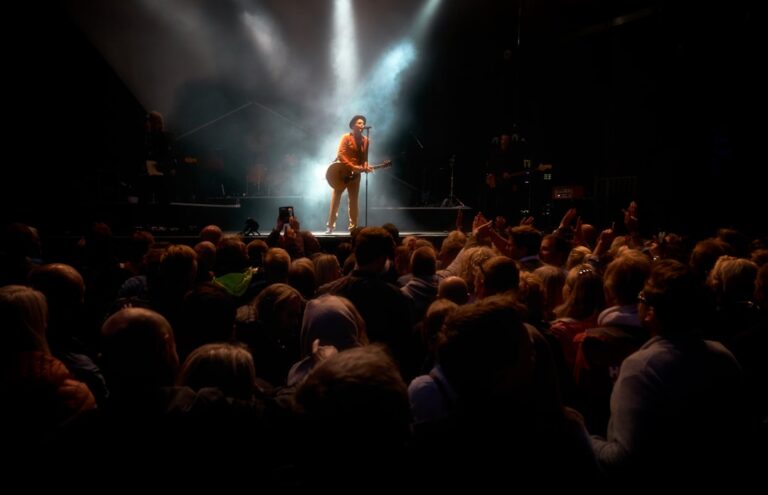
- What a New Order show sounds and feels like
- Finding official tour and ticket information
- 🧭 Where to Start With New Order
- A first-listen playlist
- Choosing albums by mood
- Conclusion
- Recommended Links
- FAQ
- Reference Links
⚡️ Quick Tips and Facts
At a glance: New Order are the Manchester band who carried Joy Division’s post-punk legacy into a thrilling new territory: synths, drum machines, guitars, and club music—all in the same song.
| Fact | Details |
|---|---|
| Formed | Manchester, England, in 1980 |
| Original members | Bernard Sumner, Peter Hook, and Stephen Morris; Gillian Gilbert joined soon after |
| Starting point | The surviving members of Joy Division continued after singer Ian Curtis died in 1980 |
| Signature sound | Post-punk guitars and bass fused with synthesizers, electronic percussion, and dance rhythms |
| Essential starting tracks | “Ceremony,” “Age of Consent,” “Blue Monday,” “Bizarre Love Triangle,” and “True Faith” |
| Essential albums | Power, Coruption & Lies (1983), Low-Life (1985), Technique (1989), and Music Complete (2015) |
| Best-known single | “Blue Monday,” a landmark electronic dance track and one of the best-known 12-inch singles ever released |
| Record label roots | Factory Records, the independent Manchester label closely associated with the band and the Haçienda |
| Official channels | New Order’s official website and official Instagram |
- Start with “Blue Monday” if you love club-ready synths; try “Age of Consent” if you want guitars and that famously restless Peter Hook bass line.
- Don’t expect Joy Division part two. New Order kept some of the earlier band’s tension but developed a brighter, more rhythmically adventurous sound.
- Their music sits across post-punk, synth-pop, new wave, alternative dance, and electronic rock. The borders blur—and that’s much of the fun.
- Curious about the band’s later split? Our companion guide explains when New Order split and what happened in the 2017 breakup.
- For more synth-pop essentials, browse our guides to iconic synth-pop songs and 80s synth-pop.
🎸 Who Are New Order?
New Order are an English band formed in Manchester in 1980 by Bernard Sumner, Peter Hook, and Stephen Morris, all formerly of Joy Division. Gillian Gilbert joined shortly after, completing the classic four-piece lineup.
Their story is often told as a dramatic change of direction: the dark, guitar-led sound of Joy Division giving way to the electronic pulse of “Blue Monday.” That shorthand is useful, but it misses something. New Order didn’t throw away their post-punk instincts; they put them in conversation with dance music. Sumner’s cool, slightly distant vocals, Hook’s melodic bass, Morris’s precise drumming, and Gilbert’s keyboards could all occupy the same track without smoothing away its rough edges.
From Joy Division to New Order
After Ian Curtis died in May 1980, the surviving members of Joy Division chose to continue as a new band. They had agreed they would not keep the Joy Division name if a member left or died. Their first New Order single, “Ceremony,” was built from a song Joy Division had performed but never released as a studio recording.
The shift was emotional as well as musical. New Order had to make a new identity without pretending the past had vanished. Movement, their 1981 debut album, captures that unsettled moment: it is spare and shadowed, but already reaching toward the synthesizers and sequencers that would become central to their sound.
The band’s name and early identity
The name New Order has sometimes been misread as a political reference. The band rejected that interpretation; the name was not intended as a reference to Nazism or fascism. Their visual identity was similarly indirect. Many records designed by Peter Saville gave listeners elegant graphics and cryptic clues instead of the usual band-name-and-album-title treatment.
That restraint became part of New Order’s appeal. The music could be emotionally intense while the artwork stayed cool and enigmatic—like a dance floor viewed through frosted glass.
📖 New Order History: From Manchester Beginnings to the Present
Formation and the first post-Joy Division years
New Order’s first single, “Ceremony,” arrived in 1981, followed by Movement. The album preserves some of Joy Division’s chilly atmosphere, but it also documents a band figuring out how to work without Curtis. Sumner took on lead vocals, while the other members expanded their roles.
The band’s earliest live performances were understandably difficult. No one could simply step into Curtis’s place, and New Order did not try to recruit a replacement singer. That decision helped define the group: instead of recreating their former identity, they built one around the voices and ideas they had.
Movement and the transition to electronic music
On Movement (1981), the synthesizers are present but not yet in full command. The mood is still heavy, the arrangements restrained. The subsequent singles “Everything’s Gone Green” and “Temptation” signaled a more open, electronic direction.
A trip to New York’s club scene and exposure to artists such as Kraftwerk, Giorgio Moroder, and Donna Summer helped sharpen New Order’s interest in dance music. The result was not a wholesale conversion to disco. They borrowed the pulse and technology, then kept their own angular guitars, uneasy harmonies, and emotionally ambiguous lyrics.
Power, Coruption & Lies and the breakthrough sound
Released in 1983, Power, Coruption & Lies is where New Order’s two sides begin to feel fully integrated. “Age of Consent” opens with bright, nimble guitar and one of Hook’s most memorable bass parts; elsewhere, synthesizers and sequencers stretch the songs into new shapes.
The album’s cover, a vivid floral painting by Henri Fantin-Latour adapted by Peter Saville, makes a striking visual contrast with its title. The sleeve also used a color-coded system to identify the record without simply printing the band and album names on the front. New Order were already telling you how they wanted to be seen: not as a conventional rock group, and certainly not as a predictable one.
Low-Life, Brotherhood, and the rise of “Bizarre Love Triangle”
Low-Life (1985) brought the band’s electronic and rock elements into a more polished, expansive form. It includes “The Perfect Kiss,” one of their most celebrated extended singles, and “Sub-Culture,” a song that shows how well their cool surfaces could carry a strong melodic hook.
Brotherhood (1986) split its original vinyl sides between guitar-oriented and electronic material, a neat structural reflection of the band’s dual nature. It also gave the world “Bizarre Love Triangle,” a song whose bright arrangement disguises a knoty lyric about uncertainty and desire. If you’ve ever wondered how a track can sound both euphoric and emotionally unsettled, this is the band’s masterclass.
Technique, Republic, and the first hiatus
Recorded partly in Ibiza, Technique (1989) absorbed the era’s acid-house and Balearic club influences without abandoning New Order’s songwriting. It became the band’s first UK No. 1 album, and its blend of guitars, electronic rhythm, and sunlit production makes it a key late-80s release.
The band’s next studio album, Republic (1993), arrived amid the collapse of Factory Records and mounting internal strain. Its singles included “Regret,” which became one of their most successful US chart hits. After touring for the album, New Order went on hiatus.
Reunion, Get Ready, and a new chapter
The band reunited in 1998 and released Get Ready in 2001. The album leaned more heavily on guitars than Technique, while still making room for electronic textures. Guests included Billy Corgan of the Smashing Pumpkins and Bobby Gillespie of Primal Scream.
Phil Cunningham joined the touring lineup in 2001 and later became a full member. Gillian Gilbert, who had stepped away from touring to focus on family life, returned for the band’s later period.
Waiting for the Sirens’ Call and the second split
Waiting for the Sirens’ Call (2005) continued the band’s guitar-and-electronics balance, with songs such as “Krafty” and “Jetstream.” Tensions between Hook and the other members grew, and Peter Hook left in 2007.
That departure became a long-running dispute over the band’s identity and rights. In 2017, the parties announced a settlement, but the musical question remained: could New Order continue without the bassist whose sound had been one of its defining features?
The 201 return, Lost Sirens, and Music Complete
Correction to the timeline: New Order returned to the stage in 201, with Gilbert back in the lineup and Tom Chapman on bass. The band released Lost Sirens in 2013, a collection of recordings from the Waiting for the Sirens’ Call sessions.
Their tenth studio album, Music Complete (2015), was the first New Order studio album without Hook. It features Chapman on bass and guest appearances from Brandon Flowers, Iggy Pop, and La Roux. Rather than disguising the lineup change, the record embraces its own moment: punchy electronic production, big choruses, and the group’s familiar knack for making emotional uncertainty sound danceable.
New Order in the 2020s
In 2020, New Order released “Be a Rebel,” their first new song in five years. The following year, Education Entertainment Recreation (Live at Alexandra Palace) documented the band onstage in London.
New Order’s live work has continued to draw on their long catalog, from early post-punk songs to club classics. For current announcements, the most reliable places to check are their official site and official Instagram, rather than assuming an old tour listing is still current.
🎹 New Order’s Sound: Post-Punk, Synth-Pop, and Dance Music
New Order’s signature is not simply “guitars plus synths.” It’s the way those sounds often behave like separate personalities. A guitar may jab sharply at the rhythm while the bass plays a melody of its own; a drum machine locks everything into a club pulse; then Sumner’s vocal delivers a line that sounds vulnerable without spelling out every feeling.
AllMusic aptly describes the group as having “fused icy, gloomy post-punk with Kraftwerk-style synth-pop.” That description catches the contrast, although New Order’s catalog also draws on disco, acid house, alternative rock, and indie pop.
Key influences and musical innovations
The band’s influences included Kraftwerk, Giorgio Moroder, Donna Summer’s “I Feel Love,” Sparks, David Bowie, Iggy Pop, Cabaret Voltaire, the Human League, and Orchestral Manoeuvres in the Dark. Those names point to a broad musical palette: electronic minimalism, glam, art rock, disco, and experimental post-punk.
New Order’s innovation was in the combination. They helped establish alternative dance as a compelling meeting point between underground rock and electronic club music. The group could make a track for a dance floor without smoothing it into conventional pop, or write a guitar song that still moved with the insistence of a sequencer.
Guitars, synthesizers, drum machines, and production
Listen closely and the roles become clearer:
- Bass: Hook’s high-register melodic lines often act like a second lead instrument, not merely a low-end anchor.
- Guitar: Sumner’s guitar parts can be clipped and economical, supplying tension and texture rather than filling every gap.
- Keyboards: Gilbert’s synthesizers add harmony, atmosphere, and hooks—sometimes all at once.
- Drums and programming: Morris’s drumming and electronic percussion provide both human push and machine precision.
- Production: The arrangement often leaves space. That negative space lets a bass phrase or synth figure become impossible to ignore.
New Order used a range of instruments and studio techniques across different eras, so there is no single “New Order synth.” Their recordings and equipment changed over time. For a useful introduction to the technology behind electronic music, Kraftwerk’s official site offers context one of their important influences; for a wider overview of synth-pop, see our 80s synth-pop guide.
Why New Order’s music shaped club culture
“Blue Monday” is the obvious landmark, but the club connection runs deeper. New Order helped fund and support Manchester’s Haçienda, the Factory Records club that became a major home for local and visiting dance music. Their sound connected indie audiences with club culture before that crossover became ordinary.
The best evidence is in the records themselves: long, groove-led arrangements that welcome repetition, but keep changing just enough to reward another listen. A New Order track can make you dance first and start analyzing the bass line on the way home.
💿 New Order Albums: A Listening Guide
Studio albums in release order
| Year | Album | What to listen for |
|---|---|---|
| 1981 | Movement | Shadowed post-punk and the first steps toward electronic textures |
| 1983 | Power, Coruption & Lies | A defining fusion of guitars, synths, and dance rhythms |
| 1985 | Low-Life | A confident, polished balance of band performance and electronics |
| 1986 | Brotherhood | A striking split between guitar-driven and electronic sides |
| 1989 | Technique | Acid-house influence, open-air production, and strong pop songwriting |
| 1993 | Republic | Big choruses and sleek 90s production amid a turbulent period |
| 2001 | Get Ready | A guitar-forward reunion album with electronic touches |
| 2005 | Waiting for the Sirens’ Call | A broad late-period set balancing familiar strengths and newer sounds |
| 2013 | Lost Sirens | Outakes and recordings from the Waiting for the Sirens’ Call sessions |
| 2015 | Music Complete | A synth-led return with Chapman on bass and several guest appearances |
For release details and catalog information, check New Order’s official website and the band’s Spotify artist page.
Best New Order albums to start with
If you’re new to the band, start with one album that matches your mood, rather than trying to digest the entire catalog in release order:
- Want the classic blend? Power, Coruption & Lies.
- Want their club-facing side? Technique.
- Want a polished mid-80s statement? Low-Life.
- Want to hear the later lineup? Music Complete.
- Want to understand the roots? Movement, then listen to Joy Division.
Our personal recommendation is Power, Coruption & Lies. It has the clearest “this is New Order” moment: the band can be sharp-edged and melodic, intimate and danceable, often inside the same song.
1. Power, Coruption & Lies
This is a terrific first full album because it captures the band in motion. “Age of Consent” is bright and immediate; “Your Silent Face” is spacious and cool; “586” leans into electronic repetition. The record doesn’t present a tidy synthesis—it lets the different approaches rub against one another.
It’s also an ideal album for headphones. Listen once for the songs, then again for how the bass, synths, and drum patterns trade attention.
2. Technique
Technique is the pick for listeners drawn to 80s dance music, alternative club sounds, and Balearic atmosphere. “Fine Time” opens with a distinctly electronic edge, while “Run” and “Dream Attack” show how the band’s pop instincts survived the move toward house-influenced production.
It is both a strong album and a document of its moment. You can hear New Order absorbing club culture while still sounding unmistakably like themselves.
3. Low-Life
Low-Life is a richly textured record: full enough to feel immersive, but not so polished that the band’s tension disappears. “The Perfect Kiss” expands into one of New Order’s great long-form tracks, while “Love Vigilantes” pairs a deceptively upbeat arrangement with a devastating narrative.
If you want to hear the classic lineup at its most assured, this is an excellent choice.
4. Brotherhood
The original LP’s two-sided division—one side more guitar-oriented, the other more electronic—makes Brotherhood a handy snapshot of New Order’s musical split personality. “Bizarre Love Triangle” is the standout, but the album’s value is in the contrast: rock instrumentation and synth-pop aren’t competing camps here; they’re two parts of the same band.
5. Music Complete
Music Complete is the strongest starting point if you want to hear New Order’s later lineup rather than treating the 1980s as the whole story. Its production is vivid and modern, but the album still relies on the group’s core strengths: memorable bass movement, sleek electronic arrangements, and a chorus that sticks around after the song ends.
Some longtime listeners may miss Hook’s distinctive playing; others will appreciate hearing the band build a different version of its sound. Both reactions are fair.
Compilations, live albums, and essential collections
- Substance (1987): A key singles collection that gathers many of the band’s most important tracks. It’s a practical entry point, though it should be followed by studio albums for the fuller context.
- The Best of New Order (1994): A career-spanning collection useful for listeners who want the familiar singles first.
- Education Entertainment Recreation (Live at Alexandra Palace) (2021): A modern live document showing how the group’s catalog works onstage.
New Order’s singles and album versions can differ, sometimes substantially. When a favorite song has an extended 12-inch mix, it’s worth hearing both versions: the radio edit tells one story; the club mix may give the groove room to unfold.
🎧 New Order’s Biggest Songs and Essential Singles
“Blue Monday” and its groundbreaking dance sound
Released in 1983, “Blue Monday” is New Order’s signature single and a landmark in electronic dance music. Its programmed rhythm, pulsing synth bass, and long structure helped bring underground dance aesthetics to a wider audience. The song was partly inspired by club music, including Klein + M.B.O.’s “Dirty Talk” and Sylvester’s “You Make Me Feel (Mighty Real).”
The single’s famous floppy-disk-inspired sleeve by Peter Saville became an emblem of the band’s design culture. Its elaborate packaging was also unusually costly to produce, a story often told as an example of how Factory Records treated artwork as part of the musical experience—not merely a container.
“Bizarre Love Triangle,” “True Faith,” and other classics
| Song | Why it matters |
|---|---|
| “Ceremony” | A bridge between Joy Division’s final songs and New Order’s first chapter |
| “Temptation” | A key early step toward the band’s more open, electronic sound |
| “Age of Consent” | A classic guitar-and-bass showcase from Power, Coruption & Lies |
| “Blue Monday” | Their defining dance track and an electronic pop landmark |
| “The Perfect Kiss” | An expansive single that captures the band’s studio ambition |
| “Bizarre Love Triangle” | A brilliant meeting of buoyant synth-pop and emotionally unsettled lyrics |
| “True Faith” | A major international hit, supported by an award-winning video |
| “World in Motion” | A 1990 collaboration with the England football team; New Order’s only UK No. 1 single |
| “Regret” | A standout from Republic and one of their most successful US chart singles |
“True Faith” became New Order’s first US Top 40 hit. “World in Motion,” released under the name EnglandNewOrder, reached No. 1 in the UK. These chart milestones underline the band’s reach, but they don’t explain the lasting appeal as well as the songs do: memorable hooks, unusual arrangements, and just enough emotional distance to keep the listener guessing.
For more essential tracks across the genre, explore our collection of iconic synth-pop songs.
Underrated New Order songs worth hearing
Once the obvious classics are in your playlist, try these:
- “In a Lonely Place” — an early song with a direct link to the Joy Division period.
- “Your Silent Face” — spacious, restrained, and quietly moving.
- “Leave Me Alone” — a reflective Power, Coruption & Lies deep cut.
- “Love Vigilantes” — buoyant music wrapped around a painfully dark story.
- “Dream Attack” — a beautiful Technique track that rewards patient listening.
- “Run” — a sleek, propulsive highlight from the same album.
- “Krafty” — a melodic later-period single with a bright, guitar-led feel.
A first-video perspective can add another interpretive layer: the featured video is described as surreal and rapidly edited, moving between city scenes, performance imagery, fireworks, and passages about fate and existence. That disorientation fits one of New Order’s recurring strengths: their music rarely pins a feeling down when it can let two or three feelings coexist.
🖼️ New Order Album Artwork and Design
Peter Saville and the band’s visual identity
Designer Peter Saville helped create one of popular music’s most recognizable visual languages through his work for Factory Records and New Order. Instead of conventional band portraits, the sleeves often used paintings, abstract compositions, color systems, and minimal typography.
That approach worked because it matched the music. New Order’s songs frequently balance clarity and mystery; Saville’s designs do the same. The records look considered without spelling out exactly what to think.
The story behind the “Blue Monday” sleeve
The original “Blue Monday” sleeve was designed to resemble a 5¼-inch floppy disk, with colored cutouts and a layered construction. Its elaborate manufacturing made it expensive and labor-intensive. The sleeve is now remembered as a design classic, and the artwork’s influence has extended well beyond record shops.
The story is more than a memorable packaging anecdote. It reflects Factory Records’ belief that a record’s physical presentation could be part of its artistic identity—even when that decision was commercially inconvenient.
👥 New Order Band Members and Lineups
The classic lineup
| Member | Role | New Order connection |
|---|---|---|
| Bernard Sumner | Vocals, guitar, keyboards | Former Joy Division member; New Order’s lead vocalist and a central songwriter |
| Peter Hook | Bass, backing vocals | Former Joy Division member; known for melodic, high-register bass lines |
| Stephen Morris | Drums, electronic percussion | Former Joy Division member; key to the band’s precise rhythmic identity |
| Gillian Gilbert | Keyboards, guitar | Joined soon after formation; helped develop the group’s electronic palette |
Former and touring members
- Tom Chapman: Joined on bass after Hook’s departure and played on Music Complete.
- Phil Cunningham: Joined as a touring member in 2001 and later became part of the band.
- Peter Hook: Left New Order in 2007 after a period of growing tension with the other members.
- Gillian Gilbert: Stepped back from touring for a time and later returned to the lineup.
Bernard Sumner, Peter Hook, Stephen Morris, and Gillian Gilbert
The band’s signature sound depends on distinct musical roles rather than a single front-person identity. Sumner’s voice is often measured and cool, Hook’s bass frequently takes the melodic lead, Morris combines live drumming with electronic precision, and Gilbert supplies a keyboard sensibility that can be melodic, atmospheric, or rhythmically sharp.
That balance helps explain why lineup changes matter to fans. Hook’s playing is distinctive enough that some listeners hear his absence immediately. The later band, meanwhile, is not simply an imitation: Chapman, Cunningham, Gilbert, Morris, and Sumner have developed a different live and recording dynamic.
🎛️ Factory Records, the Haçienda, and Manchester’s Music Scene
Factory Records and Tony Wilson
New Order were a flagship act for Factory Records, the Manchester label associated with Tony Wilson, producer Martin Hannett, and a strikingly independent artistic ethos. The label treated records, sleeves, and events as connected parts of a cultural project.
Factory’s relationship with New Order also came with real business consequences. The label’s finances were famously precarious, and its collapse contributed to the circumstances surrounding Republic. For a reliable overview of the band’s career and Factory-era context, consult the BBC’s music coverage alongside the band’s own official history and announcements.
The Haçienda and New Order’s club legacy
The Haçienda opened in Manchester in 1982 as FAC51, with New Order and Factory Records closely involved in its creation and support. The venue became a landmark in British club culture, welcoming live acts and DJs and helping connect Manchester’s post-punk scene to emerging dance music.
The club’s impact was cultural, not just commercial. It gave a local audience a place to hear sounds that did not fit comfortably into the usual rock-club categories—and gave New Order a living connection to the dance music they were exploring in the studio.
BeMusic and the band’s production projects
BeMusic was used as a publishing and production name associated with New Order members in the early-to-mid 1980s. It also allowed members to take part in production and related music work beyond the core group.
The name is a small but revealing footnote: New Order’s creative identity was larger than the four people onstage. Their world included collaborators, designers, labels, clubs, and side projects.
🌟 Joy Division, New Order, and Related Projects
How New Order’s legacy connects to Joy Division
Joy Division and New Order are connected, but neither band should be reduced to the other. Joy Division’s short catalog is known for its intense post-punk atmosphere; New Order carried some of that mood into a longer career built around electronic experimentation and dance rhythms.
Their first single, “Ceremony,” makes the connection tangible. It began as a Joy Division song and became New Order’s first release, a rare moment when one band’s final chapter and another’s opening track overlap.
Electronic, Monaco, and members’ solo work
Members have pursued numerous projects beyond New Order, including:
- Electronic, the collaboration between Bernard Sumner and Johnny Marr, with contributions from Neil Tennant and others.
- Monaco, featuring Peter Hook and David Pots.
- The Other Two, the project of Stephen Morris and Gillian Gilbert.
- Revenge, Peter Hook’s post-New Order group.
- Bad Lieutenant, a later project featuring Bernard Sumner.
- Peter Hook and the Light, which performs music from Joy Division and New Order.
These projects show how much musical ground the members covered outside the band. If your favorite New Order ingredient is Marr-style guitar, try Electronic; if it’s Hook’s bass, Monaco and Peter Hook and the Light offer further paths.
🏆 New Order’s Legacy, Influence, and Recognition
Artists influenced by New Order
New Order’s influence can be heard in artists who combine dance rhythms with alternative songwriting, including Moby, The Killers, and The xx. Their effect is not limited to direct sound-alikes. The larger lesson—that electronic production and guitar-based music can share a song without cancelling each other out—has become a basic tool of modern pop and indie music.
For newer acts working across synth-pop and alternative sounds, browse our features on modern synth-pop and female synth-pop artists.
Awards, honors, and critical reputation
New Order’s honors include:
- Three 1983 NME Awards, including recognition for Power, Coruption & Lies, “Blue Monday,” and the group.
- A Brit Award for the “True Faith” video.
- A Billboard Music Award for “Regret.”
- The NME Godlike Genius Award in 2005.
- Q magazine’s Outstanding Contribution to Music award in 2015.
- Induction into the Rock & Roll Hall of Fame in 2026, alongside Joy Division.
Awards tell only part of the story. New Order’s more durable achievement is the way their records still sound useful: not like museum pieces, but like music people can dance to, argue about, and discover at different ages.
🎟️ New Order Live: Concerts, Tours, and What to Expect
What a New Order show sounds and feels like
A New Order concert can move from the hard-edged pulse of “Blue Monday” to the guitar brightness of “Age of Consent,” then back into a synth-heavy track without feeling like a genre sampler. The catalog’s range makes the setlist part of the pleasure: listeners arrive with different favorite eras, and the songs keep finding new neighbors.
Live arrangements may differ from studio versions, especially where electronic parts and guitar lines are reworked for the stage. Fans who have followed the band for decades may listen for Hook’s original bass approach; newer audiences may come for the dance classics. Both perspectives are part of the crowd.
Finding official tour and ticket information
Tour schedules change, so check New Order’s official website and their official Instagram profile for current announcements. Their Spotify artist page may also display event listings in supported regions.
Tip: Verify the venue, date, and ticketing link on an official band or venue page before making plans. Old listings and unofficial resale pages can linger online long after a show has passed.
🧭 Where to Start With New Order
A first-listen playlist
Try this sequence to hear the band’s development without turning your first listen into a history exam:
- “Ceremony” — the bridge from Joy Division.
- “Age of Consent” — the guitar-and-bass spark.
- “Blue Monday” — the electronic dance landmark.
- “The Perfect Kiss” — New Order stretching out.
- “Bizarre Love Triangle” — peak synth-pop immediacy.
- “True Faith” — a major hit with a distinctive, hypnotic arrangement.
- “Fine Time” — the Technique era’s club influence.
- “Regret” — the polished 1990s sound.
- “Crystal” — the guitar-forward reunion period.
- “Restless” — a strong entry point to Music Complete.
Choosing albums by mood
| If you want… | Start with… |
|---|---|
| The band’s early, shadowed post-punk side | Movement |
| A clear picture of the classic New Order blend | Power, Coruption & Lies |
| A polished mid-80s album | Low-Life |
| Synth-pop hooks and a dance-floor pulse | Brotherhood |
| Club influence and a sunlit late-80s sound | Technique |
| A guitar-heavy reunion record | Get Ready |
| The later lineup and modern production | Music Complete |
One final listening tip from us: don’t save the deep cuts for “later.” New Order albums are full of songs that make better sense after the singles have hooked you. Start with “Blue Monday,” sure—but then follow the bass line somewhere less obvious.