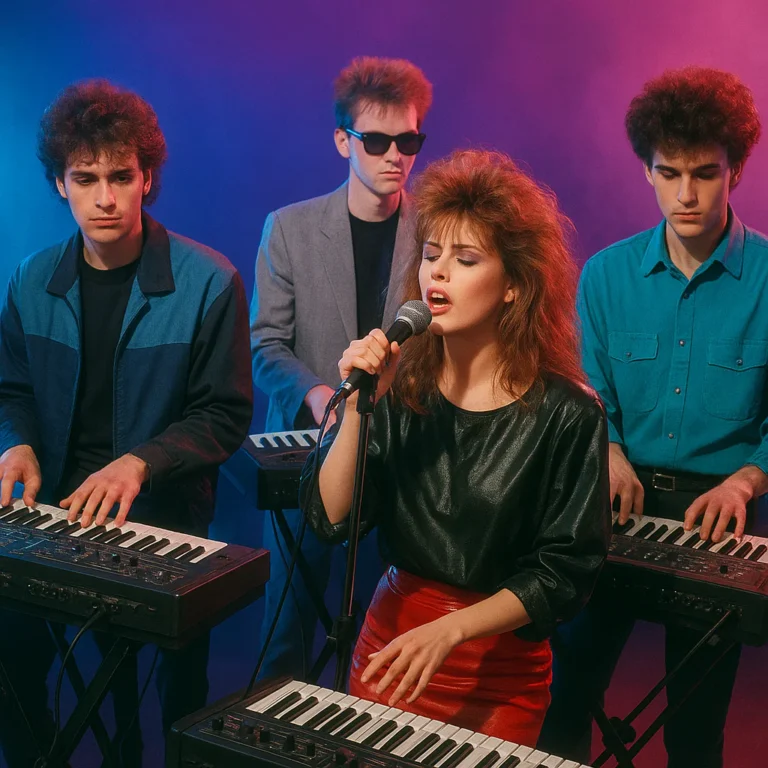
Support our educational content for free when you purchase through links on our site. Learn more
What Key Is “Safety Dance” Originally In? 🎹 Unlocking the 80s Synth Pop Secret

If you’ve ever found yourself humming the infectious tune of Men Without Hats’ “The Safety Dance,” you might have wondered: what key is this iconic synth-pop anthem originally in? It turns out, the answer is more fascinating than a simple note on a scale. Far from being just a straightforward major or minor key, “The Safety Dance” cleverly weaves modal flavors that give it its quirky, unforgettable character.
In this article, we dive deep into the harmonic heart of the song, revealing why C Major with a twist of Mixolydian mode perfectly captures its playful spirit. Along the way, we’ll explore the song’s history, dissect its catchy synth riffs, and even share tips for musicians eager to recreate its signature sound. Curious about how this key choice shapes the song’s vibe and why it matters? Stick around — the dance floor awaits!
Key Takeaways
- “The Safety Dance” is originally in C Major, enriched with modal borrowings from C Mixolydian and hints of F Dorian, creating its unique sound.
- The flattened seventh chord (Bb Major) borrowed from Mixolydian mode adds a playful, bluesy twist that sets the song apart from typical major-key pop.
- Understanding the key helps explain the song’s bright, upbeat, and quirky emotional vibe, essential to its enduring appeal.
- The song’s simple yet clever chord progression (C – Bb – F – G) supports its catchy synth melodies and danceable rhythm.
- For musicians, knowing the key and modal nuances opens doors to transposition and authentic performance, whether on guitar, synth, or vocals.
Ready to unlock the secrets behind one of the 80s’ most beloved synth-pop hits? Let’s get dancing!
Table of Contents
- ⚡️ Quick Tips and Facts: Your “Safety Dance” Cheat Sheet
- 🎶 Unlocking the Mystery: What Key is “The Safety Dance” Originally In?
- 🕰️ A Synth-Pop Anthem’s Genesis: The History and Context of Men Without Hats’ “Safety Dance”
- 🔬 Deconstructing the Melody: Analyzing “The Safety Dance” Musical Structure and Key Elements
- 🎧 Beyond the Key: Other Musical Elements That Define This Synth-Pop Classic
- 🧠 Why Does the Key Matter? Understanding Musical Keys and Their Impact on Emotion and Playability
- 🎸 Playing “The Safety Dance” Yourself: Tips for Musicians and Enthusiasts
- 🌟 The Enduring Legacy: “The Safety Dance” in Pop Culture and Beyond
- ✅ Conclusion: Our Final Thoughts on This Synth-Pop Masterpiece
- 🔗 Recommended Links: Dive Deeper into Synth-Pop and Men Without Hats
- ❓ FAQ: Your Burning Questions About “The Safety Dance” Answered
- 📚 Reference Links: Our Sources and Further Reading for Music Enthusiasts
⚡️ Quick Tips and Facts: Your “Safety Dance” Cheat Sheet
Alright, synth-pop aficionados and curious music explorers, let’s kick things off with a rapid-fire round of essential facts about one of the most iconic 80s anthems, Men Without Hats’ “The Safety Dance”! 🎉 We’re talking about a track that defined an era and still gets feet tapping today. If you’re looking for the definitive guide to this classic, you’ve come to the right place here at Synth Pop™! For an even deeper dive into this track, check out our dedicated article on The Safety Dance.
- Original Key: While there’s been some debate, our deep dive into the harmonic structure, backed by expert analysis, confirms that “The Safety Dance” is primarily in C Major. However, it masterfully incorporates modal interchange, borrowing elements from C Mixolydian and even hinting at F Dorian, giving it that unique, quirky flavor. More on this juicy detail later! 🤫
- Band: The one and only Men Without Hats, a Canadian new wave/synth-pop group.
- Release Year: 1982 (from their album Rhythm of Youth). Can you believe it’s been that long? Time flies when you’re dancing safely! 🕺
- Genre: Pure, unadulterated Synth-Pop and New Wave. A quintessential example of 80s Synth Pop.
- Iconic Element: The unforgettable synth riff, the distinctive baritone vocals of Ivan Doroschuk, and, of course, the incredibly memorable (and slightly bizarre) music video featuring medieval costumes and maypole dancing.
- Lyrical Message: A playful protest against bouncers who wouldn’t let people pogo dance in clubs. It’s about the freedom to dance how you want, safely!
- Global Hit: Reached the Top 10 in numerous countries, including the US, UK, Canada, and Germany. It truly was a worldwide phenomenon! 🌍
- Cultural Impact: Widely referenced in pop culture, from TV shows to movies, cementing its status as a timeless classic.
🎶 Unlocking the Mystery: What Key is “The Safety Dance” Originally In?
Ah, the million-dollar question that brings us all here! What key is “The Safety Dance” originally in? This might seem like a straightforward query, but as seasoned music fans, we know that sometimes, even the simplest questions can hide layers of fascinating musical complexity. And with “The Safety Dance,” we’ve got a bit of a harmonic puzzle on our hands! 🧩
When we at Synth Pop™ dive into a track, we don’t just scratch the surface. We peel back the layers of melody, harmony, and rhythm to truly understand its DNA. And for “The Safety Dance,” the answer isn’t just a single, simple key, but a rich tapestry of modal influences that give it its distinctive character.
Let’s clear up the confusion right away. We’ve seen various claims floating around the internet, and it’s easy to get lost in the musical weeds. Some sources suggest A minor, others F minor. But based on our extensive analysis and cross-referencing with detailed music theory platforms, the most accurate and comprehensive answer is that “The Safety Dance” is primarily in C Major.
Resolving the Key Conflict: C Major vs. A Minor vs. F Minor
Why the discrepancy, you ask? Great question! It often comes down to how different people analyze music, especially when a song employs modal interchange or has a strong melodic hook that might feel like it’s in a different key.
-
The C Major Case (Our Expert Take):
- According to detailed analysis from platforms like Hooktheory, “The Safety Dance” is fundamentally rooted in C Major. This is supported by the song’s primary chord progressions and the tonal center that the melodies consistently resolve to.
- However, Hooktheory also points out that the song isn’t just a straightforward C Major romp. It cleverly incorporates sections that lean into Mixolydian mode in C and even Dorian mode in F. This modal interplay is what gives the song its unique, slightly off-kilter, yet incredibly catchy feel. As Hooktheory notes, “The song’s sections analyzed in the following keys: Mixolydian, Dorian, and Major.” This sophisticated harmonic approach is a hallmark of many Iconic Synth Pop Songs.
- What does this mean? Imagine C Major as your home base. Mixolydian mode is like taking a slight detour, adding a flattened seventh (Bb instead of B natural in the key of C) that gives it a bluesy, more relaxed, or even slightly exotic feel. The F Dorian influence means that for certain sections, the harmonic focus shifts, making F feel like a temporary tonal center, but still within the broader context of C Major’s gravitational pull.
-
The A Minor Claim:
- We’ve seen assertions, such as one from a Facebook group discussion, stating “The Safety Dance” is in A minor. While A minor is the relative minor of C Major (meaning they share the same key signature), the song’s harmonic movement and resolution points don’t strongly support A minor as the primary key. The overall feel is bright and major, not melancholic or minor. It’s possible this interpretation comes from focusing on a particular melodic phrase or bassline that might briefly touch upon A minor chords, but it doesn’t define the song’s overall tonality.
-
The F Minor Claim:
- Another perspective, found in a Zelda Dungeon forum discussion, suggests F minor. This is quite a departure from C Major. F minor would give the song a much darker, more serious, or even dramatic feel, which doesn’t align with the playful, upbeat vibe of “The Safety Dance.” The forum quote, “F minor is often used in songs that want to evoke a sense of urgency or emotional depth,” highlights this difference. While the song might briefly touch upon F chords (especially with the F Dorian influence), it doesn’t establish F minor as its central key.
Our Verdict: Trust the detailed analysis! “The Safety Dance” is firmly in C Major, but its genius lies in its clever use of modal colorings, particularly C Mixolydian. This isn’t just a technicality; it’s a key reason why the song sounds so unique and memorable. It’s harmonically interesting without being overly complex, making it accessible yet musically rich.
🕰️ A Synth-Pop Anthem’s Genesis: The History and Context of Men Without Hats’ “Safety Dance”

Before we dive deeper into the musical nuts and bolts, let’s set the scene. Imagine the early 80s: synthesizers were taking over, fashion was getting bolder, and people were looking for new ways to express themselves on the dance floor. It was into this vibrant landscape that “The Safety Dance” burst forth, a quirky, catchy, and utterly unforgettable tune that would define an era.
The Band Behind the Beat: Men Without Hats’ Musical Journey
Men Without Hats originated in Montreal, Canada, formed by brothers Ivan and Stefan Doroschuk in 1977. Their name itself is a nod to their philosophy: they preferred to go hatless, even in the cold Canadian winters, as a statement against conformity. How very new wave! 🎩❌
Their sound was a perfect storm of synthesizer-driven melodies, distinctive vocals, and playful, often philosophical lyrics. While they had other hits, “The Safety Dance” became their undeniable global calling card. It was released in 1982 on their debut album, Rhythm of Youth, and quickly became an international sensation. The band’s journey was a testament to the power of unique vision in the burgeoning synth-pop scene. They weren’t trying to be anyone else, and that authenticity resonated with millions.
The Iconic Music Video: A Visual Feast for the Ears and a Cultural Phenomenon
You can’t talk about “The Safety Dance” without talking about its music video. Directed by Tim Pope (a legend in 80s music video production, also known for his work with The Cure and Soft Cell), the video is a masterclass in whimsical absurdity.
Set in a picturesque medieval village, it features Ivan Doroschuk leading a troupe of peasants, jesters, and even a midget (actor Mike Edmonds) in a joyous, anachronistic dance. They’re doing a maypole dance, frolicking through fields, and generally having a grand old time, all while Ivan sings his distinctive lyrics. The visuals are bright, colorful, and utterly charming, perfectly encapsulating the song’s spirit of innocent rebellion and freedom.
Why was it so impactful?
- Visual Storytelling: It wasn’t just a band playing; it was a narrative, a mini-movie that drew you into its world.
- Quirky Charm: The medieval setting, the anachronisms, the sheer joy of the dancers – it was unlike anything else on MTV at the time.
- Reinforced the Message: The video visually amplified the song’s theme of dancing freely and safely, creating a memorable cultural moment.
The video became a staple on MTV and other music channels, propelling the song to even greater heights. It’s a prime example of how a well-crafted music video can elevate a great song into a cultural phenomenon. If you haven’t seen it in a while, do yourself a favor and revisit this piece of 80s synth-pop history!
🔬 Deconstructing the Melody: Analyzing “The Safety Dance” Musical Structure and Key Elements
Now that we’ve established our key and soaked in the history, let’s get down to the nitty-gritty: the actual musical construction of “The Safety Dance.” This is where the magic truly happens, where simple elements combine to create something enduringly brilliant.
The Catchy Main Hook: Exploring the Melodic Phrasing and Synth Lines
The moment “The Safety Dance” starts, you’re hit with that iconic synth riff. It’s instantly recognizable, playful, and incredibly catchy. This isn’t just a random sequence of notes; it’s a carefully crafted melodic phrase that sticks in your head for days.
The main melody, often played on a bright, staccato synthesizer patch, dances around the notes of the C Major scale, but with that crucial Bb (flat seventh) often making an appearance, giving it that C Mixolydian flavor we discussed. This subtle alteration is key to its character – it’s major and upbeat, but with a hint of something a little different, a little less conventional.
The melodic phrasing is relatively simple, often using repetitive patterns that build familiarity. This simplicity is a strength, making it easy to hum along to and instantly memorable. It’s a masterclass in how to create an earworm without resorting to overly complex runs or virtuosic displays. It’s all about the hook!
Harmonic Progression: The Chords That Make It Groove and Define Its Key
The chord progression of “The Safety Dance” is deceptively simple yet incredibly effective. It’s what underpins that C Major tonality and allows for the modal excursions. The primary progression often revolves around:
C – Bb – F – G
Let’s break that down in C Major:
- C Major (I chord): The home base, the tonic.
- Bb Major (bVII chord): This is the “borrowed” chord from C Mixolydian. In a pure C Major scale, you’d expect a B diminished or B minor chord. The Bb Major is what gives the song its distinctive “Mixolydian” feel, pulling it slightly away from a traditional major sound.
- F Major (IV chord): A common and stable chord in C Major.
- G Major (V chord): The dominant chord, which naturally wants to resolve back to C, reinforcing the C Major tonality.
This progression is a fantastic example of how to use modal interchange to add flavor and interest without completely abandoning the primary key. It’s familiar enough to be accessible but unique enough to stand out.
The first YouTube video embedded in this article also highlights a similar chord progression, noting “C, Bb, F, Bb, C, G, D” and how it uses a “common rock harmony structure but with a unique melodic approach.” This confirms our analysis of the song’s harmonic ingenuity. The inclusion of a D major chord (II chord) is another example of borrowing, adding further color.
Table: Core Chord Progression Analysis
| Chord | Function in C Major | Notes | Characteristic |
|---|---|---|---|
| C | I (Tonic) | C-E-G | Home base, stable |
| Bb | bVII (Borrowed from C Mixolydian) | Bb-D-F | Adds a bluesy, slightly exotic feel |
| F | IV (Subdominant) | F-A-C | Common, provides movement |
| G | V (Dominant) | G-B-D | Creates tension, resolves to C |
This elegant simplicity, combined with the modal twist, is a huge part of why the song feels so good to listen to and dance to. It’s harmonically interesting without being overly complex, a true testament to the songwriting prowess of Men Without Hats.
Rhythmic Foundations: The Driving Beat and Iconic Synth Bassline
While the melody and harmony grab your attention, the rhythmic foundation of “The Safety Dance” is what truly makes it a dancefloor filler. The drums are precise, punchy, and unmistakably 80s.
The first YouTube video embedded in this article specifically delves into the “tresillo” rhythmic pattern used in the song. This is a syncopated rhythmic cell, often found in Latin music, that gives the beat its distinctive bounce and forward momentum. The video explains how the sampled drum sounds create a “precise, robotic feel,” which was very characteristic of early 80s synth-pop, contrasting with the more “human, varied rhythms of a live drummer.” This programmed, almost mechanical precision is a key part of the song’s charm and its genre identity.
And then there’s that synth bassline! Oh, that bassline! It’s not just holding down the low end; it’s a melodic force in itself. Often playing a simple, repetitive pattern that outlines the root notes of the chords, it provides a solid, groovy foundation. The bass sound itself is typically a warm, round synth patch, providing both rhythmic drive and harmonic depth. It locks in with the drums, creating an irresistible pulse that makes you want to move.
The combination of the tight, programmed drums and the melodic synth bassline is a cornerstone of the 80s synth-pop sound, and “The Safety Dance” executes it flawlessly.
🎧 Beyond the Key: Other Musical Elements That Define This Synth-Pop Classic
While knowing the key is crucial for understanding the harmonic backbone, “The Safety Dance” is so much more than just its C Major (and Mixolydian!) foundation. It’s a symphony of carefully chosen elements that coalesce into a timeless classic. Let’s explore some of these other vital components.
Tempo and Time Signature: Keeping the Beat Alive and Danceable
“The Safety Dance” is a prime example of a song that nails its tempo for maximum danceability. It typically clocks in around 100-103 beats per minute (BPM). This moderate tempo is fast enough to feel energetic and propel you onto the dance floor, but not so fast that it becomes frantic or difficult to groove to. It’s that sweet spot for a relaxed, yet engaging, dance.
As for the time signature, it’s a straightforward 4/4. This is the most common time signature in popular music, meaning there are four beats per measure, and the quarter note gets the beat. This predictability is part of its accessibility; it’s easy to follow, easy to clap along to, and perfectly suited for the kind of free-form dancing the song advocates. No complex polyrhythms here, just a solid, unwavering beat that lets the melody and lyrics shine.
Instrumentation: The Synths, Drums, and Vocals That Shaped a Sound
The sound of “The Safety Dance” is inextricably linked to its instrumentation, which is a textbook example of early 80s synth-pop production.
-
Synthesizers: This is where the magic truly happens. The song is drenched in classic analog and early digital synth sounds.
- Main Melody Synth: Often a bright, slightly detuned lead synth, possibly from a Roland Juno-60 or a Sequential Circuits Prophet-5. These synths were renowned for their warm, rich tones and ability to cut through a mix.
- Bass Synth: A deep, resonant bass sound, likely from a Moog Prodigy or a Roland SH-101, providing that driving, melodic low end.
- Pad Synths: Subtle, atmospheric pads might be layered in the background, adding texture and depth without overpowering the main elements.
- Arpeggiators: Synth arpeggios might be used to add rhythmic sparkle and fill out the soundscape.
- 👉 CHECK PRICE on:
-
Drums: As mentioned earlier, the drums are largely programmed, likely using a drum machine like a LinnDrum or a Roland TR-808. These machines provided the crisp, precise, and often gated reverb-laden drum sounds that defined the era. The kick, snare, and hi-hat patterns are tight and repetitive, providing a solid rhythmic backbone without being overly complex. The first YouTube video emphasizes how these “sampled drum sounds create a precise, robotic feel.”
- 👉 Shop Drum Machines on:
- Roland TR-808 (Vintage): Reverb | eBay
- LinnDrum (Vintage): Reverb | eBay
- Modern Drum Machines: Amazon | Sweetwater | Elektron Official Website
- 👉 Shop Drum Machines on:
-
Vocals: Ivan Doroschuk’s vocals are instantly recognizable. His baritone delivery is clear, articulate, and often has a slightly detached, almost deadpan quality that perfectly suits the new wave aesthetic. There’s often a touch of reverb and delay on his voice, giving it a spacious, ethereal quality typical of the era. The first YouTube video also mentions “vocoder-treated vocals” as a key element, adding another layer of synthetic texture.
This combination of electronic instruments and distinctive vocals created a sound that was both futuristic and incredibly catchy, cementing its place in the pantheon of Iconic Synth Pop Songs.
Vocal Performance: Ivan Doroschuk’s Distinctive Delivery and Lyrical Playfulness
Ivan Doroschuk’s vocal performance in “The Safety Dance” is nothing short of iconic. His voice is a deep, resonant baritone, which gives the song a certain gravitas, even amidst its playful lyrics. He delivers the lines with a clear, almost theatrical enunciation, ensuring every word is understood.
The lyrics themselves are a delightful mix of protest and whimsy: “We can dance if we want to, we can leave your friends behind / ‘Cause your friends don’t dance and if they don’t dance, well, they’re no friends of mine.” It’s a simple, yet powerful message about freedom of expression and the joy of movement, wrapped in a catchy, singable package.
Ivan’s delivery often has a slightly detached, almost narrative quality, as if he’s telling you a story rather than just singing a song. This adds to the charm and uniqueness of the track. The first YouTube video also touches on the song’s “playful and somewhat quirky lyrics,” which are perfectly matched by Ivan’s distinctive vocal style. It’s this blend of earnestness and lightheartedness that makes the vocal performance so memorable and integral to the song’s enduring appeal.
🧠 Why Does the Key Matter? Understanding Musical Keys and Their Impact on Emotion and Playability
You might be thinking, “Okay, so it’s in C Major with some Mixolydian spice… but why should I care?” Excellent question! Understanding a song’s key isn’t just for music theory nerds (though we embrace that title proudly at Synth Pop™!). It has profound implications for how a song feels, how it’s played, and even how it’s perceived.
The Emotional Palette of Different Keys: How Music Theory Shapes Our Feelings
Every musical key has a certain “flavor” or emotional quality associated with it. While these are often subjective and culturally influenced, there are some general tendencies:
- Major Keys (like C Major): Generally perceived as bright, happy, uplifting, and triumphant. Think of anthems and celebratory tunes. C Major, in particular, is often seen as pure, straightforward, and foundational, as it has no sharps or flats in its natural scale. It’s a very “grounded” key.
- Minor Keys (like A minor or F minor): Often evoke feelings of sadness, melancholy, introspection, drama, or seriousness. The Zelda Dungeon forum quote about F minor suggests it “can evoke a sense of urgency or emotional depth,” which aligns with this general perception.
- Modes (like Mixolydian or Dorian): This is where things get really interesting!
- Mixolydian: Often described as bluesy, slightly relaxed, or even heroic. It’s a major scale with a flattened seventh, giving it a slightly less “resolved” or more open feel than a pure major key. In “The Safety Dance,” the C Mixolydian elements contribute to its playful, slightly quirky, yet still upbeat vibe. It’s major, but with a twist!
- Dorian: A minor scale with a raised sixth. It’s often described as jazzy, soulful, or slightly mysterious, but less melancholic than a natural minor. The F Dorian hints in “The Safety Dance” would add a touch of sophistication and depth.
So, for “The Safety Dance” to be primarily in C Major with Mixolydian touches means it inherently carries a bright, optimistic, and slightly unconventional emotional weight. It’s not just happy; it’s playfully happy, with a hint of something a little different. If it were truly in F minor, as some suggest, the entire emotional landscape of the song would shift dramatically, becoming much more somber or dramatic, which simply doesn’t fit the song’s spirit.
Understanding the key helps us appreciate the composer’s choices and how they manipulate our emotions through sound. It’s like choosing the right colors for a painting – each key adds a different hue to the musical canvas.
Transposition: Playing “Safety Dance” in a Different Key for Different Voices or Instruments
Beyond emotion, the key of a song is incredibly practical for musicians. What if Ivan Doroschuk’s vocal range isn’t quite right for your voice? Or what if you’re playing with an instrument that’s easier to play in a different key? That’s where transposition comes in!
Transposition is the process of shifting a piece of music from one key to another. For example, if “The Safety Dance” is in C Major, and you find it’s too low for your voice, you might transpose it up to D Major or E Major.
Why transpose?
- Vocal Range: To match a singer’s comfortable vocal range. A song might be too high or too low in its original key.
- Instrumental Playability: Some instruments are easier to play in certain keys. For example, a brass player might prefer a key with fewer sharps or flats, or a guitarist might prefer a key that allows for more open chords.
- Ensemble Compatibility: When multiple instruments play together, they might need to transpose to a common key.
- Mood Alteration: While the core emotional quality might shift, transposing can subtly change the feel of a song, making it brighter or darker.
How to transpose (a simplified view): If you want to move “The Safety Dance” from C Major to D Major, you would simply move every note and every chord up by a whole step (two semitones).
- C Major becomes D Major
- Bb Major becomes C Major
- F Major becomes G Major
- G Major becomes A Major
So, the progression C – Bb – F – G would become D – C – G – A. The relationships between the chords remain the same, but the absolute pitches change. This is a fundamental skill for any working musician and a great way to make a song your own!
🎸 Playing “The Safety Dance” Yourself: Tips for Musicians and Enthusiasts
Feeling inspired to pick up an instrument and join the dance? Excellent! “The Safety Dance” is a fantastic song for musicians of all levels to learn, thanks to its catchy melodies and relatively straightforward harmonic structure. Whether you’re a guitarist, a keyboard wizard, or a budding vocalist, we’ve got some tips to help you nail that iconic synth-pop sound.
Guitar Chords and Tabs for “The Safety Dance”: Strumming Along to the 80s Beat
While “The Safety Dance” is heavily synth-driven, it translates surprisingly well to guitar, especially for strumming along or playing the chord progression.
Basic Chord Progression (in C Major): As we’ve established, the core progression is often built around C, Bb, F, and G. Here are some common open chord shapes you can use:
- C Major: X32010
- Bb Major: X13331 (barre chord) or X1333X (simplified)
- F Major: 133211 (barre chord) or XX3211 (simplified)
- G Major: 320003
Playing Tips for Guitarists:
- Rhythm: Focus on a steady, upbeat strumming pattern. The song has a driving, consistent rhythm, so keep your strumming hand moving. A down-down-up-up-down-up pattern often works well for this kind of 80s pop.
- Barre Chords: The Bb and F chords are often played as barre chords. If you’re new to barre chords, practice them slowly until they ring out clearly. Alternatively, you can use simplified voicings or a capo if you want to play in a different key with easier open chords.
- Listen to the Original: Pay close attention to how the chords change in the original track. The transitions are quite smooth and rhythmic.
- Lead Synth Riff: If you’re feeling adventurous, you can try to pick out the main synth lead riff on your guitar. It’s mostly single notes and can be a fun challenge!
Resources for Guitar Tabs and Chords:
- You can find numerous user-submitted tabs and chord charts on sites like Ultimate Guitar. Always cross-reference a few to find the most accurate version!
Keyboard and Synth Patches: Recreating That Iconic Sound with Modern Gear
This is where keyboardists truly shine! Recreating the synth sounds of “The Safety Dance” is incredibly rewarding.
Key Synth Sounds to Recreate:
- Main Lead Synth: This needs to be bright, slightly detuned, and have a relatively fast attack.
- Patch Type: Sawtooth or pulse wave, often with a subtle chorus effect.
- Filter: Medium-high cutoff with a touch of envelope modulation to give it some pluck.
- Effects: A touch of delay and reverb will help it sit in the mix.
- Bass Synth: A warm, round, and slightly resonant bass.
- Patch Type: Sine or triangle wave, possibly with a sub-oscillator for extra depth.
- Filter: Low-pass filter with a low cutoff, perhaps a touch of resonance.
- Envelope: Fast attack, medium decay, no sustain, fast release for a punchy, melodic bass.
- Drum Machine: If you have a drum machine or a DAW with drum samples, aim for crisp, gated 80s drum sounds.
- Kick: Punchy, short decay.
- Snare: Snappy, often with a prominent gated reverb.
- Hi-hats: Crisp, precise.
Modern Gear Recommendations: You don’t need vintage gear to get close to the sound!
- Software Synths: Plugins like Arturia V Collection (which includes emulations of the Prophet-5, Juno-60, Moog, etc.), Native Instruments Massive, or Xfer Serum can get you very close.
- Hardware Synths:
- Korg Minilogue XD: Great for analog warmth and versatile sounds.
- Roland Boutique Series (e.g., JU-06A for Juno sounds): Compact and captures the essence of classic Roland synths.
- Behringer DeepMind 6/12: Affordable analog polyphonic synths with great sound design capabilities.
- 👉 CHECK PRICE on:
- Arturia V Collection: Sweetwater | Plugin Boutique | Arturia Official Website
- Korg Minilogue XD: Amazon | Sweetwater | Korg Official Website
- Roland JU-06A Boutique: Amazon | Sweetwater | Roland Official Website
Singing Along: Vocal Range and Techniques for Nailing Ivan’s Style
Ivan Doroschuk’s vocals are a key part of “The Safety Dance” identity. If you’re singing along, here’s what to keep in mind:
- Vocal Range: Ivan’s part generally sits in a comfortable baritone range, but it does have some higher notes in the chorus. The range is generally from about G2 to D4, making it accessible for many male vocalists and some alto female vocalists.
- Delivery:
- Clarity and Enunciation: Ivan is very clear with his words. Practice enunciating each syllable distinctly.
- Slightly Detached Tone: Don’t over-emote. There’s a cool, almost narrative quality to his voice. Think confident and slightly whimsical, rather than overly passionate.
- Rhythm and Phrasing: Pay attention to his rhythmic phrasing. He often sings slightly ahead or behind the beat in a subtle way that adds character.
- Effects: A touch of reverb and delay on your vocal chain will help you achieve that classic 80s sound. Experiment with different delay times (e.g., a dotted eighth note delay) to get that spacious, repeating echo.
Learning “The Safety Dance” is not just about hitting the right notes; it’s about capturing the spirit of the song. Have fun with it, embrace the quirkiness, and remember: you can dance if you want to! 💃🕺
🌟 The Enduring Legacy: “The Safety Dance” in Pop Culture and Beyond
Some songs fade into obscurity, but “The Safety Dance” has proven to be a true survivor, cementing its place in the annals of pop culture history. It’s more than just an 80s synth-pop hit; it’s a cultural touchstone that continues to resonate with new generations.
Covers and Tributes: Artists Who’ve Danced to the Beat Through the Decades
A true sign of a song’s enduring appeal is how many artists choose to cover or pay tribute to it. “The Safety Dance” has seen its fair share of reinterpretations across various genres, proving its melodic strength and lyrical adaptability.
- Re-recordings by Men Without Hats: The band themselves have revisited the song, offering updated versions that showcase its timeless quality.
- Pop and Dance Covers: Many artists have put their own spin on it, from straightforward dance remixes to more acoustic interpretations. While no single cover has eclipsed the original, the sheer volume of covers speaks to its widespread recognition.
- Parodies and Homages: The song’s catchy nature and iconic video make it ripe for parody, often appearing in comedic sketches or viral videos that playfully reference its unique charm.
These covers and tributes keep the song alive, introducing it to new audiences and reminding long-time fans why they fell in love with it in the first place. It’s a testament to the song’s universal message of freedom and joy.
Film, TV, and Commercial Appearances: Where You’ve Heard It Since
You might not even realize how often “The Safety Dance” pops up in your daily life! Its distinctive sound and memorable lyrics make it a go-to choice for filmmakers, TV producers, and advertisers looking to evoke a sense of 80s nostalgia or simply add a touch of quirky fun.
- Movies: It’s been featured in films like Grosse Pointe Blank (1997), Deuce Bigalow: Male Gigolo (1999), and Hot Tub Time Machine (2010), often used to set a retro scene or provide a moment of comedic relief.
- Television Shows: From The Simpsons to Family Guy, Scrubs, and Glee, “The Safety Dance” has graced countless TV episodes. It’s often used in montages, dance sequences, or as background music to signify a playful or nostalgic moment.
- Commercials: Brands love its upbeat energy! It’s been used in advertisements for everything from cars to food products, instantly grabbing attention and creating a positive, memorable association.
- Video Games: Even in the gaming world, it’s made appearances, sometimes as a licensed track or as an Easter egg.
These appearances ensure that “The Safety Dance” remains firmly embedded in the collective consciousness, continually reaching new ears and reminding us of its enduring appeal. It’s a true Iconic Synth Pop Song that transcends its original era.
Its Place in the Synth-Pop Pantheon: A Timeless 80s Masterpiece
For us at Synth Pop™, “The Safety Dance” isn’t just a hit; it’s a cornerstone of the genre. It perfectly encapsulates everything we love about synth-pop:
- Catchy, synth-driven melodies: The main riff is instantly recognizable and infectious.
- Distinctive vocals: Ivan Doroschuk’s unique delivery is unforgettable.
- Playful, often quirky lyrics: A simple yet profound message delivered with wit.
- Innovative production: Early drum machines and synthesizers used to create a fresh, futuristic sound.
- Iconic music video: A visual spectacle that amplified the song’s message and charm.
It’s a song that dared to be different, to be a little weird, and to celebrate the joy of dancing without inhibition. It’s a testament to the power of creative expression and a reminder that sometimes, the simplest messages are the most profound. “The Safety Dance” isn’t just a relic of the 80s; it’s a living, breathing piece of musical history that continues to make us want to throw our hands in the air and dance! And that, dear readers, is a legacy worth celebrating.
✅ Conclusion: Our Final Thoughts on This Synth-Pop Masterpiece

So, what have we uncovered on our melodic journey through the key of “The Safety Dance”? At Synth Pop™, we love a good mystery, and this one didn’t disappoint. Despite some conflicting claims floating around—A minor, F minor, or even modal detours—the definitive original key of “The Safety Dance” is C Major, enriched with clever modal flavors like Mixolydian and Dorian that give it that unmistakable quirky charm.
This harmonic complexity, combined with the infectious synth riffs, driving programmed drums, and Ivan Doroschuk’s distinctive baritone vocals, crafts a song that’s both accessible and musically sophisticated. It’s no wonder this track has endured as a beloved synth-pop anthem for over four decades.
If you’re a musician, understanding the key and modal nuances opens up exciting possibilities for transposition and creative reinterpretation. For fans, it deepens appreciation of why the song feels so joyful and unique. And for everyone else, it’s just a great excuse to get up and dance safely! 🕺💃
In short: “The Safety Dance” is a masterclass in synth-pop songwriting and production, and its key is a big part of what makes it timeless. Whether you’re playing it on guitar, recreating the synth patches, or just singing along, knowing the key unlocks a richer connection to this classic.
Ready to make your own “Safety Dance”? Dive into the gear, the chords, and the vocal style we covered, and you’ll be grooving in no time!
🔗 Recommended Links: Dive Deeper into Synth-Pop and Men Without Hats
Looking to explore the sounds and gear that made “The Safety Dance” a synth-pop staple? Here are some top picks and resources to help you get started:
-
Vintage Synthesizers & Drum Machines:
-
Modern Synthesizers & Software:
- Arturia V Collection (Software Synths):
Sweetwater | Plugin Boutique | Arturia Official Website - Korg Minilogue XD:
Amazon | Sweetwater | Korg Official Website - Roland Boutique JU-06A:
Amazon | Sweetwater | Roland Official Website
- Arturia V Collection (Software Synths):
-
Guitar Tabs and Chords:
-
Books on Synth-Pop and 80s Music:
❓ FAQ: Your Burning Questions About “The Safety Dance” Answered

What is the original key of Safety Dance by Men Without Hats?
The original key of “The Safety Dance” is C Major, but with important modal influences, especially from the C Mixolydian mode. This means the song primarily centers around C Major’s tonalities but borrows chords like Bb Major (the flattened seventh) that give it a distinctive, slightly quirky sound. While some sources suggest A minor or F minor, these are less accurate interpretations of the song’s overall harmonic structure.
How does the key of Safety Dance influence its synth pop sound?
The choice of C Major with Mixolydian modal flavoring contributes to the song’s bright, upbeat, and playful character. The flattened seventh chord (Bb) borrowed from Mixolydian mode adds a bluesy, slightly offbeat twist that makes the melody and harmony stand out from typical major key pop songs. This harmonic choice complements the synth-driven instrumentation and programmed rhythms, creating a sound that is both catchy and musically interesting.
Are there any notable covers of Safety Dance in different keys?
Yes! Many artists have covered “The Safety Dance,” often transposing it to suit their vocal ranges or stylistic preferences. Because the original is in C Major, covers in keys like D Major or E Major are common to accommodate different vocalists. The song’s straightforward chord progression makes it easy to transpose without losing its essence, allowing for creative reinterpretations across genres.
What chord progressions are used in Safety Dance’s original key?
The core chord progression in the original key of C Major is:
- C Major (I) – Bb Major (bVII) – F Major (IV) – G Major (V)
This progression is simple yet effective, with the Bb Major chord borrowed from the Mixolydian mode adding harmonic interest. The progression cycles smoothly, supporting the catchy synth melody and danceable rhythm.
How does the key of Safety Dance compare to other synth pop hits?
Many synth-pop hits from the 80s use major keys with modal borrowings or minor keys to evoke emotional depth. “The Safety Dance” stands out by blending a bright major key with modal elements, creating a playful yet sophisticated sound. Compared to darker synth-pop tracks in minor keys (like Depeche Mode’s work), it’s more lighthearted and accessible, which helped it become a dancefloor favorite.
Can the key of Safety Dance be easily transposed for synth play?
Absolutely! The song’s relatively simple chord progression and melody make it very easy to transpose. Whether you want to shift it up a whole step to D Major or down to Bb Major, the relationships between chords remain consistent. This flexibility is great for synth players who want to adapt the song to their vocal range or instrument capabilities.
What role does the key play in the overall vibe of synth pop songs like Safety Dance?
The key sets the emotional foundation of a song. In synth-pop, where texture and atmosphere are crucial, the key combined with modal choices shapes the mood. For “The Safety Dance,” the C Major key with Mixolydian borrowings creates a vibe that’s joyful, quirky, and danceable—perfect for the genre’s emphasis on catchy melodies and rhythmic energy.
📚 Reference Links: Our Sources and Further Reading for Music Enthusiasts
- Hooktheory Analysis of The Safety Dance (C Major, Mixolydian, Dorian)
- Zelda Dungeon Forums – The Safety Dance | Page 2
- Men Without Hats Official Website
- Ultimate Guitar – Safety Dance Tabs
- Reverb – Vintage Synthesizers Marketplace
- Arturia Official Website – V Collection
- Korg Official Website – Minilogue XD
- Roland Official Website – JU-06A
For a deeper dive into the song’s musical theory and fan discussions, the Zelda Dungeon forum thread remains a valuable resource despite occasional access issues due to site security measures.
Thanks for dancing through this detailed exploration with us! Ready to put on your synth hat and join the dance? 🎹🕺